
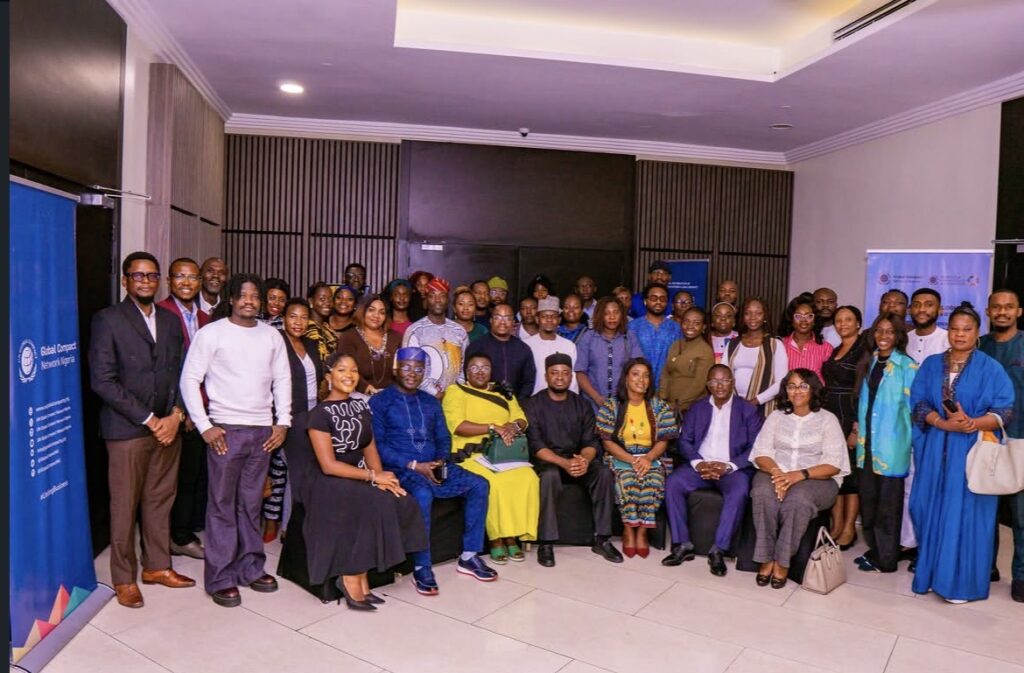
The UN Global Compact Network Nigeria convened a high-level dialogue with Danish partners on 19 June 2026, themed on accountability practices that earn lasting trust. The dialogue was held alongside the closure of the 2026 Business and Human Rights Accelerator Programme, bringing the year’s cohort together with the wider business community for their graduation.
The framing of the dialogue, business and human rights as a business advantage, was chosen with intent. Human rights due diligence is still widely treated as a compliance exercise imposed from outside. The session argued the opposite case: that companies able to evidence how they identify and address human rights risk in their own operations and supply chains hold a commercial advantage, particularly as legislation in partner markets continues to tighten.
Remarks and keynote addresses were delivered by Naomi Nwokolo, Uto Ukpanah and Pwadumdi Okoh, with an emphasis on government and business collaboration to advance human rights due diligence. Sahara Group and Reliance Chemical Products then shared practical implementation insights drawn from their own participation in the Accelerator, covering what the process required of them internally.
The panel featured representatives of NNPC, Dangote, Verod Capital and the UNHCR, combining the perspectives of large operators, the investment community and a United Nations agency working directly with affected populations.
Sustained Commitment Awards were presented to three companies for successfully completing the programme, recognising those that carried the work through the full cycle from commitment to an operating due diligence process.