
From NDC Commitments to Corporate Action: What Nigeria’s Private Sector Must Do Next
Nigeria has set the targets. Its Nationally Determined Contributions (NDCs) set out where the country needs to be by 2030, and the national commitment to net zero by 2060 sets the longer horizon. The harder question is what happens after the policy document, and who carries those commitments into boardrooms, budgets and operations.
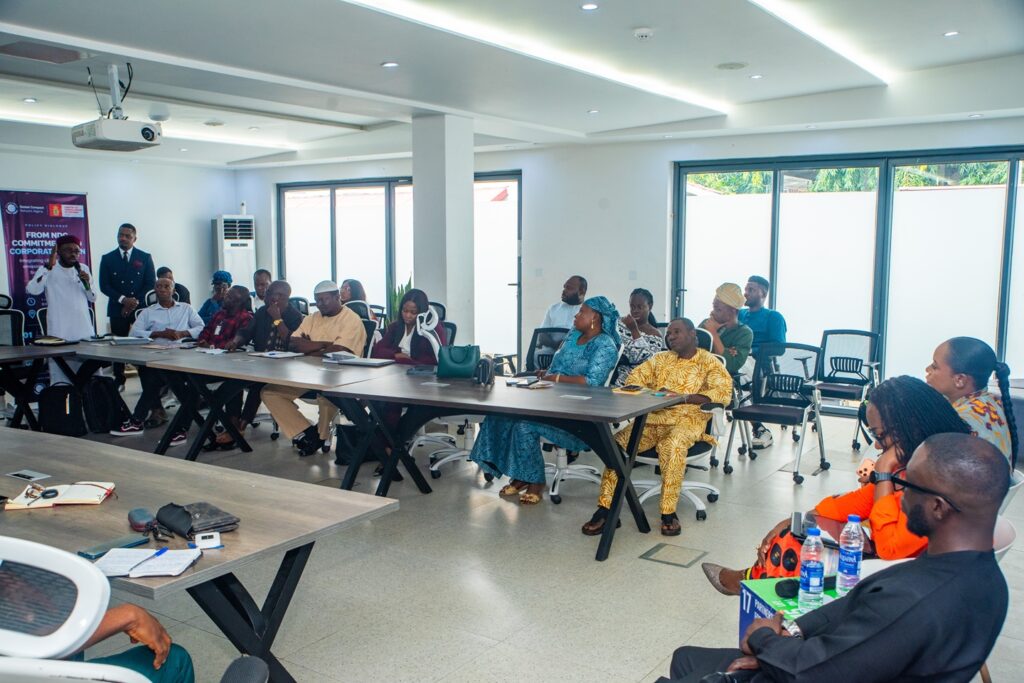
On Friday, 11 September 2026, UN Global Compact Network Nigeria convened “From NDC Commitments to Corporate Action” in Lagos. The private sector dialogue, held under our Climate Ambition Accelerator, focused on how businesses can build climate risk and emissions reduction into their core strategy rather than treating them as a separate compliance exercise.
Climate resilience is a business conversation
Gloria Okorie, Head of Programmes at UN Global Compact Network Nigeria, opened the dialogue on behalf of our Chief Executive Officer, Naomi E. Nwokolo, Esq. She framed why the conversation mattered. These are environmental issues, but their consequences are economic, and they reach all of us. Climate resilience, she said, is a business conversation about continuity, competitiveness and the ability to plan.
The most important word is action
Titilayo Oshodi, MCIPM, FISMN, Special Adviser on Climate Change and Circular Economy to the Governor of Lagos State, was direct. “The most important word in today’s theme is action.” Climate change presents real risks for business, she noted, but the response to those risks is also creating new markets and new growth opportunities. This, she explained, is where ESG (environmental, social and governance) becomes EESG, because the economic argument cannot be overridden.
Proof that growth and emissions cuts can coexist
Jesper Friis, Director of Emerging Markets at the Confederation of Danish Industry (DI), showed that the two can coexist. Denmark has grown its economy substantially while cutting emissions just as substantially, and it is working towards a 70% reduction by 2030. That progress, he said, took government and the private sector moving together. Sustainability is the right thing to do, and it is becoming a competitive parameter that companies will be measured against.
Start where your emissions actually are
Oje Eno, MBA, represented James Ogunleye, Managing Director and Chief Executive Officer of Carbon Limits, and brought the discussion to where companies actually start. His advice was to begin with Scope 1 and 2 emissions. He urged companies to build a template that represents their own operations rather than borrowing global default factors, which he showed can overstate a facility’s emissions many times over. For Nigerian businesses, accurate measurement is the foundation for credible targets, better decisions and conversations with investors.
Good for the climate is not the same as investable
Oluwakemi Olajide, Principal at Africa Climate Ventures, named what founders still get wrong. A business can be genuinely good for the climate and still not be investable. “Going green is not just a nice to have. It’s what’s important for your margins.” Climate ambition has to come with a sound business model if it is going to attract capital.
From intention to implementation
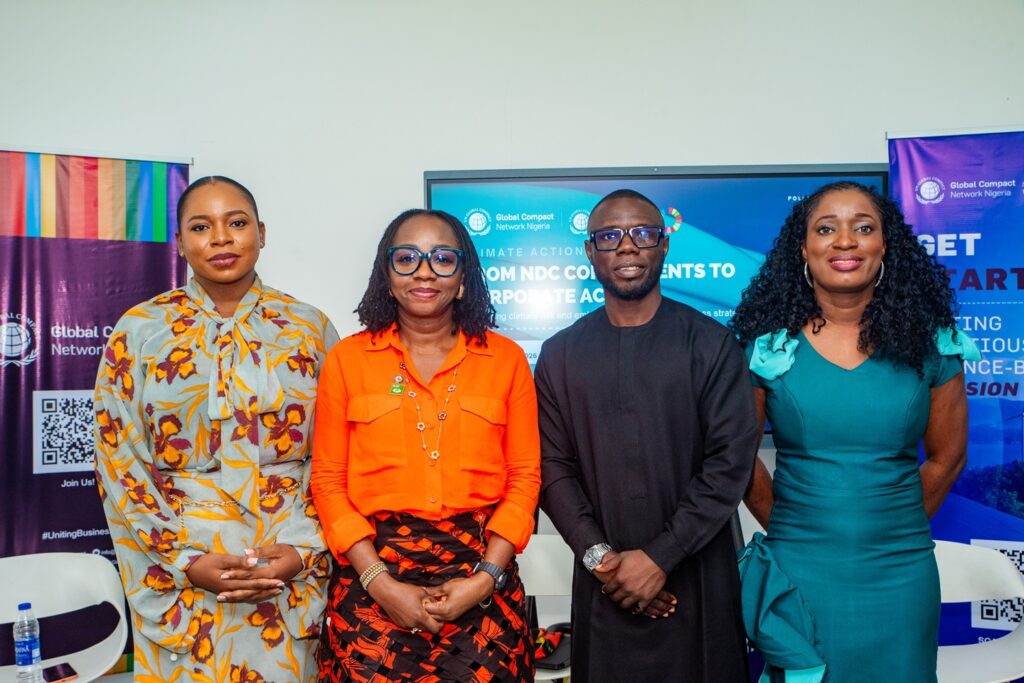
Taken together, the session made one point clear. Nigeria’s climate targets will not be met by policy alone. They will be met when companies understand their own emissions, price climate risk into their plans and build models that are both sustainable and investable.
Thank you to our speakers, our partners at Carbon Limits, and everyone who spent Friday morning moving this agenda from intention to implementation.
To learn how your organisation can take part in the Climate Ambition Accelerator and future dialogues, contact us at info@globalcompactng.org.